Introduction
A healthy, safe and secure working environment is essential for every organisation. Employees should be able to perform their duties without facing unnecessary risks to their health, safety or security.
A workplace may be an office, school computer laboratory, factory, shop or any other organisation where people perform their work.
In this chapter, we will learn about workplace safety policies, different types of hazards, computer-related health problems, office ergonomics, accident prevention, fire safety and emergency procedures.
1. Health, Safety and Security at Workplace
Health, safety and security are three important aspects of a good working environment.
1.1 Health
Health refers to the physical, mental and social well-being of a person.
A healthy workplace should provide:
- Clean and hygienic surroundings.
- Safe and clean drinking water.
- Proper ventilation and lighting.
- Clean washrooms.
- Comfortable furniture.
- A stress-free working environment.
1.2 Safety
Safety means protecting people from accidents, injuries and other workplace hazards.
Examples:
- Keeping electrical wires properly arranged.
- Using machines carefully.
- Keeping floors clean and dry.
- Providing fire extinguishers.
- Maintaining clear emergency exits.
1.3 Security
Security means protecting employees, visitors, equipment, information and other workplace resources from threats or unauthorised access.
Examples:
- Installing CCTV cameras.
- Using passwords to protect computer systems.
- Keeping important documents secure.
- Restricting access to authorised persons.
- Protecting office equipment from theft.
Difference between Health, Safety and Security
| Health | Safety | Security |
|---|---|---|
| Focuses on physical and mental well-being. | Protects people from accidents and injuries. | Protects people and resources from threats. |
| Clean drinking water is an example. | Fire prevention is an example. | CCTV surveillance is an example. |
2. Health, Safety and Security Policies
A Health, Safety and Security (HSS) policy is a written statement prepared by an organisation explaining its commitment to protecting employees and visitors.
It describes the rules, responsibilities and procedures that everyone must follow to maintain a safe workplace.
Main elements of an HSS policy
- Workplace health and safety objectives.
- Identification of workplace hazards.
- Rules and procedures for preventing accidents.
- Responsibilities of employees and management.
- Emergency response procedures.
- Training and awareness programmes.
2.1 Reasons for implementing HSS policies
- To prevent workplace accidents and injuries.
- To protect employees and visitors.
- To improve employee confidence and productivity.
- To maintain a clean and healthy environment.
- To protect workplace equipment and property.
- To establish responsibilities among employees.
- To comply with applicable safety rules and regulations.
3. Workplace Safety Hazards
A hazard is anything that has the potential to cause injury, illness, damage or loss.
A risk is the possibility that a hazard will actually cause harm, considering its likelihood and severity.
Example: A damaged electrical wire is a hazard. The possibility of someone receiving an electric shock is the risk.
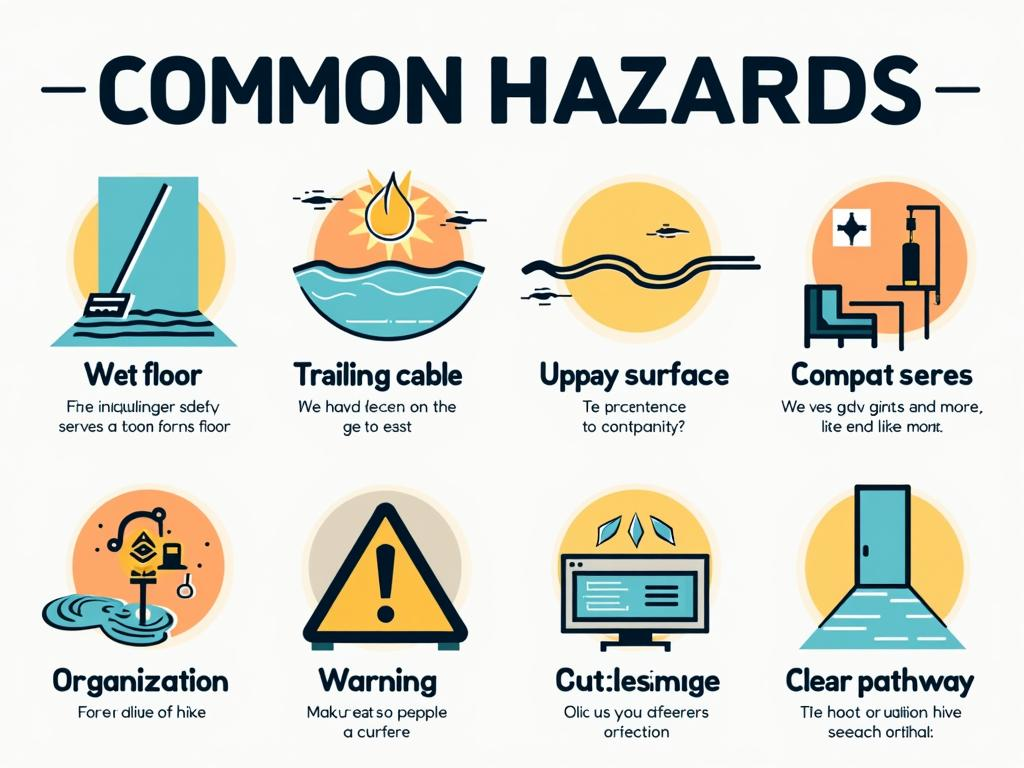
3.1 Types of Workplace Hazards
A. Physical Hazards
Physical hazards arise from unsafe physical conditions in the workplace.
Examples:
- Uneven floors.
- Slippery surfaces.
- Falling objects.
- Poor lighting.
- Unsafe machinery.
- Excessive noise.
Prevention:
- Keep floors clean and dry.
- Maintain proper lighting.
- Repair damaged equipment.
- Keep walkways free from obstacles.
- Use warning signs where necessary.
B. Slipping, Tripping and Falling Hazards
These accidents occur when a person loses balance or falls because of unsafe workplace conditions.
Causes:
- Wet or slippery floors.
- Loose electrical wires.
- Objects left in walkways.
- Uneven flooring.
- Damaged stairs.
- Improper use of ladders.
Prevention:
- Clean spilled liquids immediately.
- Use wet-floor warning signs.
- Arrange wires safely.
- Keep passages clear.
- Repair damaged floors and stairs.
- Use ladders correctly.
C. Electrical Hazards
Electrical hazards occur due to unsafe handling or use of electrical equipment.
Causes:
- Touching exposed electrical wires.
- Using damaged plugs and cables.
- Overloading electrical sockets.
- Handling electrical devices with wet hands.
- Using electrical equipment near water.
Prevention:
- Never touch electrical equipment with wet hands.
- Do not use damaged cables or plugs.
- Avoid overloading electrical sockets.
- Keep water and food away from electrical equipment.
- Get faulty wiring repaired by qualified technicians.
- Switch off equipment when not in use.
Important: Never attempt to repair a live electrical connection yourself.
D. Fire Hazards
Fire hazards occur when flammable materials, electrical faults or unsafe working practices create conditions that may cause a fire.
Common causes:
- Short circuits.
- Overloaded electrical sockets.
- Improper storage of flammable materials.
- Smoking in restricted areas.
- Poor housekeeping.
- Careless use of heating equipment.
Prevention:
- Maintain electrical equipment regularly.
- Store flammable materials safely.
- Keep fire extinguishers accessible.
- Avoid blocking emergency exits.
- Install and maintain fire alarms.
- Train employees in fire safety procedures.
E. Health Hazards
Health hazards are workplace conditions that can negatively affect the physical or mental health of employees.
Examples:
- Excessive noise.
- Dust and harmful fumes.
- Poor ventilation.
- Inadequate lighting.
- Stress and fatigue.
- Uncomfortable working conditions.
Prevention:
- Maintain clean air and water.
- Provide suitable protective equipment.
- Ensure proper ventilation.
- Reduce unnecessary noise.
- Provide comfortable furniture.
- Encourage regular breaks.
4. Hazards While Using Computers
Working continuously on a computer without following proper safety practices can cause several health problems.
Common computer-related hazards
- Poor sitting posture.
- Sitting continuously for long hours.
- Repetitive keyboard and mouse movements.
- Screen glare and eye strain.
- Neck and back pain.
- Wrist and shoulder discomfort.
- Mental stress and fatigue.
Prevention
- Sit in a comfortable position.
- Keep the monitor at a suitable eye level.
- Maintain a comfortable distance from the screen.
- Take regular short breaks.
- Avoid excessive screen brightness.
- Keep your wrists in a natural position.
- Exercise and stretch regularly.
5. Handling Office Equipment and Objects
5.1 Handling Office Equipment
Office equipment includes printers, photocopiers, computers, scanners, shredders and other devices.
Improper handling can cause injuries or damage to equipment.
Safety measures:
- Read the instruction manual before using equipment.
- Use equipment only for its intended purpose.
- Keep hands away from moving parts.
- Do not operate damaged equipment.
- Switch off equipment before cleaning or maintenance.
- Report equipment defects to the responsible person.
5.2 Handling Heavy Objects
Lifting or moving heavy objects incorrectly may cause back injuries, muscle strain and other physical problems.
Correct safety practices:
- Check the weight before lifting.
- Bend your knees rather than bending your back.
- Keep the object close to your body.
- Avoid twisting your body while lifting.
- Ask for assistance when an object is too heavy.
- Use a trolley for transporting heavy materials.
6. Stress at Workplace
Workplace stress is a condition in which a person experiences mental or emotional pressure because of work-related situations.
Causes of workplace stress
- Long working hours.
- Excessive workload.
- Lack of rest.
- Conflicts with colleagues.
- Poor management.
- Unrealistic deadlines.
- Lack of work-life balance.
Ways to manage workplace stress
- Plan and organise daily work.
- Take short breaks.
- Maintain healthy relationships with colleagues.
- Practise relaxation exercises.
- Develop hobbies.
- Maintain a healthy work-life balance.
7. Working Environment Hazards
A poor working environment can affect the health, comfort and productivity of employees.
Common problems:
- Poor ventilation.
- Improper lighting.
- Uncomfortable furniture.
- Excessive noise.
- Incorrect chair and table height.
- Poor cleanliness.
Solutions:
- Provide sufficient fresh air.
- Maintain suitable lighting.
- Arrange furniture properly.
- Keep the workplace clean.
- Reduce unnecessary noise.
- Follow workplace safety guidelines.
8. Hazard Control Measures
Hazard control measures are actions taken to remove hazards or reduce the possibility of injury and damage.
The commonly used hierarchy of hazard control includes:
1. Elimination
Elimination means completely removing the hazard from the workplace.
Example: Removing a damaged electrical cable from service and replacing it.
2. Substitution
Substitution means replacing a dangerous material, process or equipment with a safer alternative.
Example: Using a less hazardous cleaning material.
3. Isolation or Engineering Controls
Isolation means separating people from a hazard. Engineering controls modify equipment or the workplace to reduce exposure.
Example: Installing a protective guard around moving machinery.
4. Administrative Controls
These are rules, instructions, training and procedures used to reduce risks.
Example: Training employees to follow safe operating procedures.
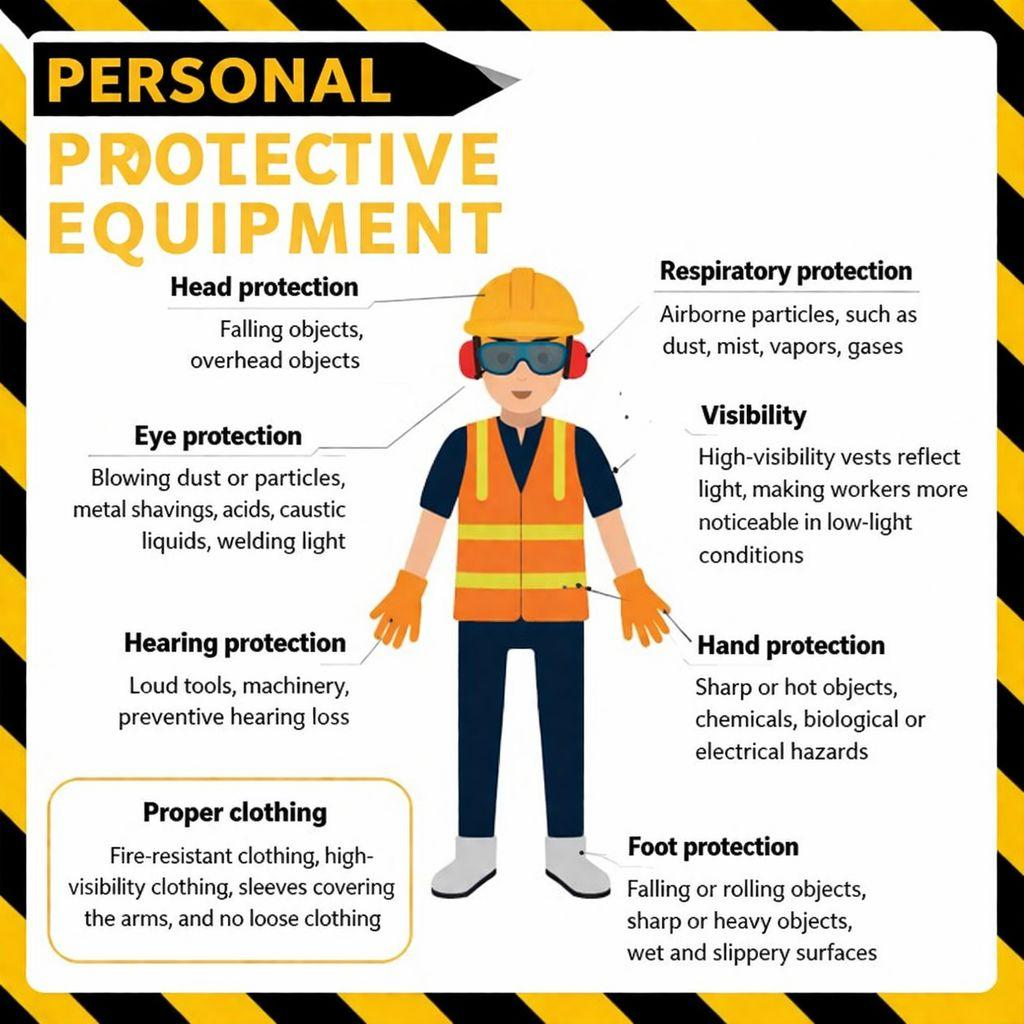
5. Personal Protective Equipment (PPE)
PPE refers to protective items worn by workers to reduce exposure to hazards.
Examples:
- Safety gloves.
- Safety goggles.
- Face masks.
- Helmets.
- Safety shoes.
- Ear protection.
Remember: PPE is an important safety measure, but it should not replace removing or controlling a hazard wherever possible.
9. General Workplace Safety Guidelines
- Keep the workplace clean and organised.
- Use proper protective equipment.
- Never operate unfamiliar machines without training.
- Do not touch damaged electrical wires.
- Keep emergency exits clear.
- Store chemicals in properly labelled containers.
- Follow safety instructions and warning signs.
- Switch off equipment when it is not required.
- Report unsafe conditions immediately.
- Avoid loose clothing near moving machinery.
10. Workplace Quality Measures
Workplace quality measures help maintain a clean, comfortable and healthy working environment.
10.1 Air and Water Quality Monitoring
Air and water quality monitoring is the process of checking whether air and water are clean and safe.
It may involve physical, chemical and biological testing.
Importance:
- Helps identify pollution.
- Protects employee health.
- Ensures a clean working environment.
- Helps detect harmful substances.
10.2 Guidelines for Clean Air and Clean Water
Clean air:
- Maintain proper ventilation.
- Control dust and harmful gases.
- Avoid unnecessary air pollution.
- Maintain equipment that produces fumes.
- Keep the workplace clean.
Clean water:
- Provide safe drinking water.
- Prevent wastewater from contaminating clean water.
- Maintain water storage tanks.
- Test water quality regularly where required.
- Avoid improper disposal of chemicals.
10.3 Importance of Cleanliness at Workplace
Cleanliness is essential for maintaining health and preventing accidents.
Benefits:
- Reduces the spread of diseases.
- Prevents slips and falls.
- Improves employee comfort.
- Increases productivity.
- Creates a positive working environment.
- Protects equipment and materials.
11. Office Ergonomics
Ergonomics is the science of designing and arranging the workplace, furniture and equipment to suit the needs and comfort of people.
Its main purpose is to reduce physical strain, prevent injuries and improve efficiency.
Importance of ergonomics
- Reduces muscle fatigue.
- Prevents back and neck pain.
- Improves sitting posture.
- Reduces repetitive strain injuries.
- Increases comfort and productivity.
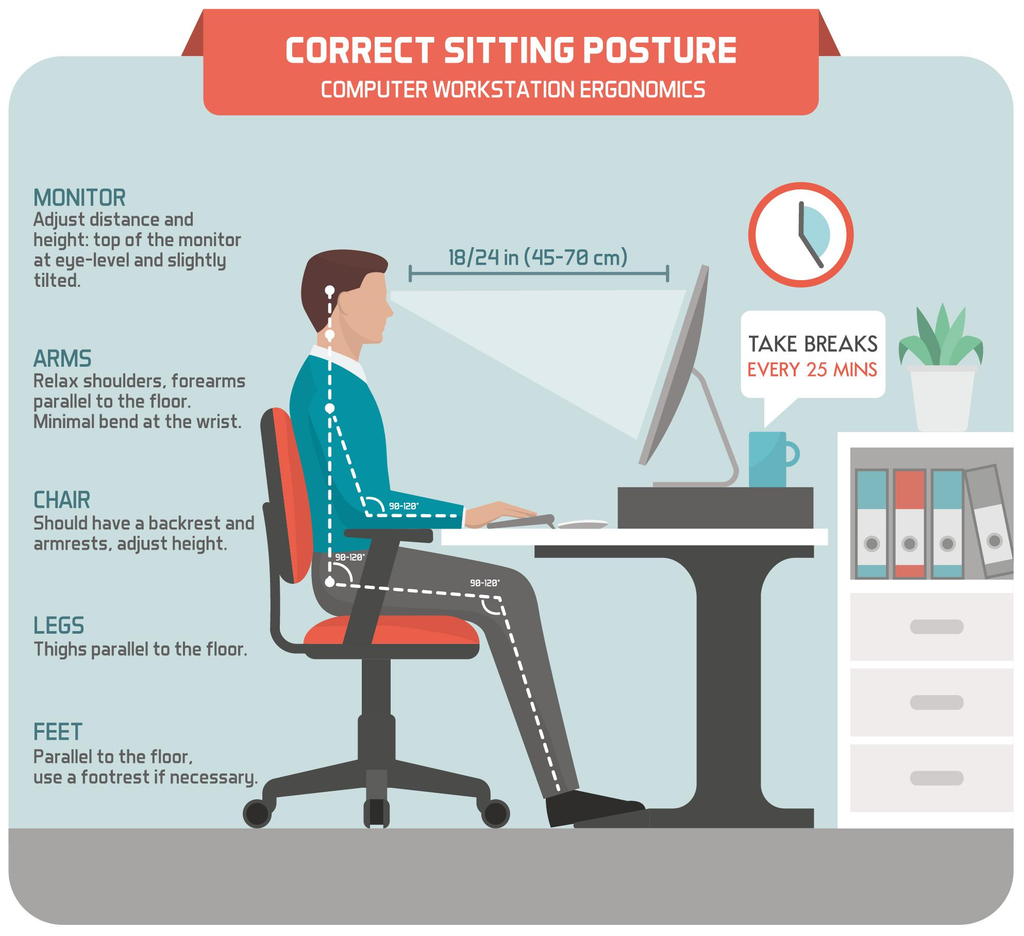
11.1 Correct Computer Sitting Posture
- Sit with your back supported by the chair.
- Keep your feet flat on the floor or on a footrest.
- Keep your monitor at a comfortable viewing height.
- Keep your shoulders relaxed.
- Position your keyboard and mouse comfortably.
- Avoid bending your neck forward.
- Take regular breaks.
11.2 Computer Health and Safety Tips
- Adjust the brightness of the monitor.
- Avoid screen glare.
- Keep the monitor directly in front of you.
- Maintain a comfortable sitting position.
- Keep wrists straight while typing.
- Take regular breaks from computer work.
- Rest your eyes periodically.
- Maintain proper room lighting.
12. Common Health Problems Caused by Poor Ergonomics
12.1 Musculoskeletal Problems
Musculoskeletal problems affect muscles, joints, bones, tendons and other supporting structures of the body.
Causes:
- Incorrect sitting posture.
- Poorly designed furniture.
- Long working hours.
- Repetitive movements.
- Improper keyboard positioning.
Symptoms:
- Back pain.
- Neck pain.
- Shoulder pain.
- Muscle stiffness.
- Wrist discomfort.
Prevention:
- Use an ergonomic chair.
- Maintain correct posture.
- Keep the monitor at a suitable height.
- Take regular breaks.
- Perform simple stretching exercises.
12.2 Occupational Overuse Syndrome (OOS) / Repetitive Strain Injury (RSI)
Occupational Overuse Syndrome is a condition that develops due to repeated movements or continuous use of particular muscles and joints.
It is also commonly associated with repetitive strain injuries.
Common causes:
- Continuous typing.
- Repeated mouse movements.
- Incorrect hand positioning.
- Working without sufficient breaks.
Symptoms:
- Pain in wrists and fingers.
- Shoulder discomfort.
- Neck pain.
- Tingling or numbness.
- Muscle fatigue.
Prevention:
- Maintain correct typing posture.
- Keep wrists straight.
- Avoid gripping the mouse tightly.
- Take regular breaks.
- Use comfortable keyboards and mice.
12.3 Stress Disorders
Stress disorders may develop when a person experiences continuous mental pressure.
Causes:
- Heavy workload.
- Long working hours.
- Workplace conflicts.
- Lack of rest.
Prevention:
- Maintain a healthy routine.
- Take breaks.
- Practise relaxation techniques.
- Manage workload properly.
- Seek support when needed.
12.4 Sleeping Problems
Excessive screen use, particularly near bedtime, may disturb sleep patterns.
Prevention:
- Avoid unnecessary screen use before sleeping.
- Maintain a regular sleep schedule.
- Reduce screen brightness in the evening.
- Take sufficient rest.
13. Health and Safety Requirements for a Computer Workplace
A computer workstation should be designed to provide comfort and reduce physical strain.
A. Display Screen (Monitor)
- The monitor should be suitable for the work being performed.
- Characters should be clear and readable.
- The screen should be positioned comfortably.
- Avoid glare and reflections.
B. Keyboard
- The keyboard should be comfortable to use.
- It should be positioned to allow natural arm and wrist movement.
- Avoid unnecessary bending of the wrists.
C. Work Surface
- The desk should have enough space for the computer and documents.
- The surface should not produce excessive reflections.
- Equipment should be arranged conveniently.
D. Space Requirements
- There should be sufficient space for movement.
- Employees should be able to change their sitting position.
- Walkways should remain clear.
E. Lighting
- Maintain proper room lighting.
- Avoid excessive brightness.
- Prevent reflections on the monitor.
- Use curtains or blinds when necessary.
F. Electricity Safety
- Do not touch electrical equipment with wet hands.
- Avoid damaged electrical cables.
- Do not overload sockets.
- Keep liquids away from computers.
- Report electrical faults immediately.
14. Preventing Accidents and Emergencies
14.1 Accident
An accident is an unplanned or unexpected event that may cause injury, damage or loss.
Examples:
- A person slipping on a wet floor.
- An employee receiving an electric shock.
- An object falling on a person.
14.2 Emergency
An emergency is a serious situation that requires immediate attention and action to prevent injury, damage or loss of life.
Examples:
- Fire outbreak.
- Major electrical accident.
- Serious workplace injury.
- Natural disaster.
Difference between Accident and Emergency
| Accident | Emergency |
|---|---|
| An unexpected event that may cause injury or damage. | A serious situation requiring immediate action. |
| Example: Slipping on a wet floor. | Example: A building fire requiring evacuation. |
14.3 Guidelines for Handling Accidents and Emergencies
- Identify the accident or emergency correctly.
- Stay calm and assess the situation from a safe location.
- Inform the responsible authority.
- Call emergency services when required.
- Follow the organisation’s safety procedures.
- Prevent further injury without putting yourself at risk.
- Provide first aid only within your training and ability.
- Follow instructions from emergency personnel.
- Report the incident to the supervisor.
15. Types of Workplace Accidents
A. Trip and Fall
A trip and fall accident occurs when someone catches their foot against an object and loses balance.
Causes:
- Loose wires.
- Objects left on the floor.
- Uneven surfaces.
- Poorly arranged furniture.
B. Slip and Fall
A slip and fall accident occurs when someone loses balance because of a slippery surface.
Causes:
- Wet floors.
- Oil spills.
- Water leakage.
- Loose floor tiles.
Prevention:
- Clean spills immediately.
- Use warning signs.
- Keep floors dry.
- Repair damaged flooring.
C. Accidents Due to Moving Objects
These accidents occur when a person is injured by moving or falling objects.
Examples:
- Moving trolleys.
- Falling equipment.
- Improperly stored materials.
- Moving machinery.
Prevention:
- Secure materials properly.
- Keep a safe distance from moving machinery.
- Use protective equipment.
- Follow safety instructions.
16. Handling Workplace Accidents
When an accident occurs, the following steps should be followed:
- Ensure that the area is safe before approaching.
- Call for help immediately.
- Arrange first aid or medical assistance.
- Inform the supervisor or responsible authority.
- Do not move a seriously injured person unless there is immediate danger.
- Follow the instructions of trained medical personnel.
- Report and document the incident.
- Identify the cause to prevent similar accidents.
17. Types of Emergencies and Safety Procedures
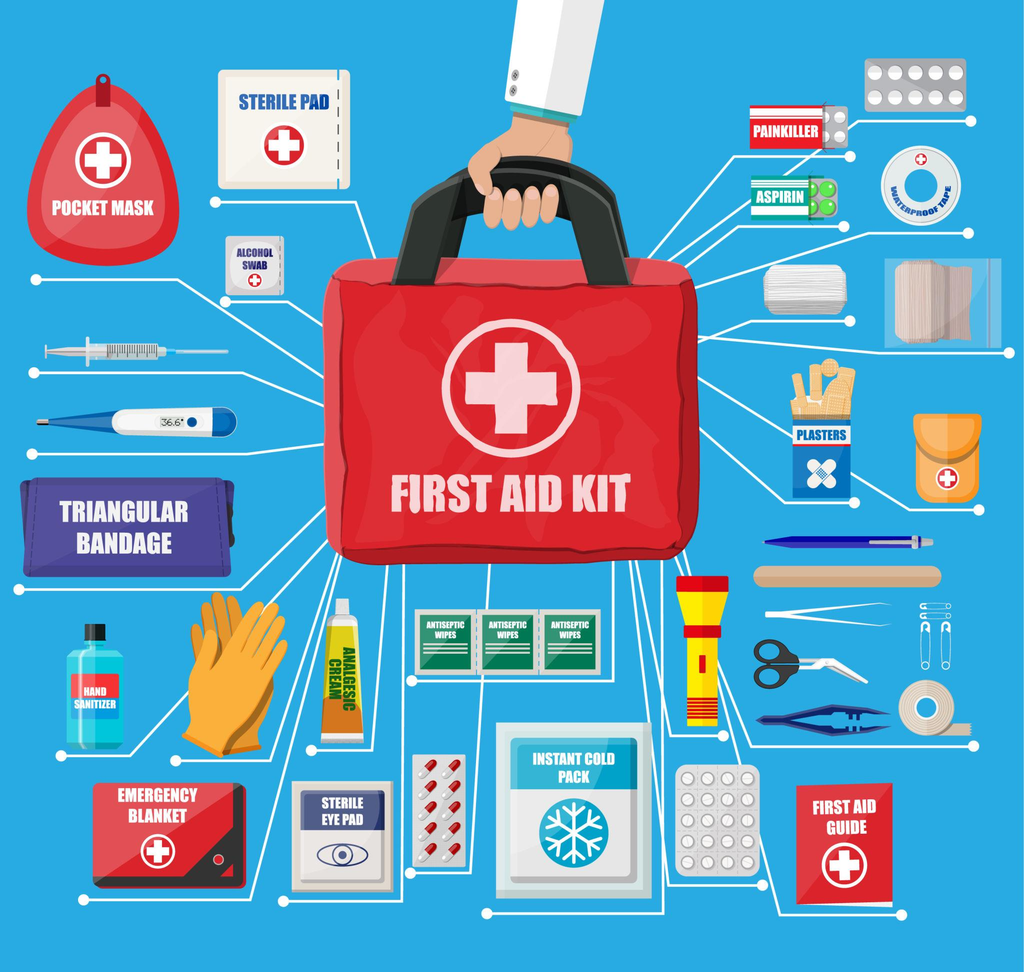
17.1 First Aid
First aid is the immediate assistance given to an injured or sick person before professional medical help arrives.
A first-aid box should be available at the workplace.
Common first-aid supplies:
- Sterile gauze.
- Adhesive bandages.
- Antiseptic wipes.
- Medical gloves.
- Adhesive tape.
- Scissors.
- Sterile dressings.
Important: First aid should be provided by a trained person whenever possible. Serious injuries require professional medical assistance.
17.2 Emergency Contacts
Every workplace should maintain a list of important emergency contact numbers.
Examples:
- Police.
- Fire brigade.
- Ambulance.
- Hospital.
- Security department.
- Emergency coordinator.
17.3 Emergency Equipment
Important emergency equipment includes:
- Fire extinguishers.
- Fire alarms.
- First-aid kits.
- Emergency lights.
- Smoke detectors.
- Emergency communication systems.
All equipment should be inspected and maintained regularly.
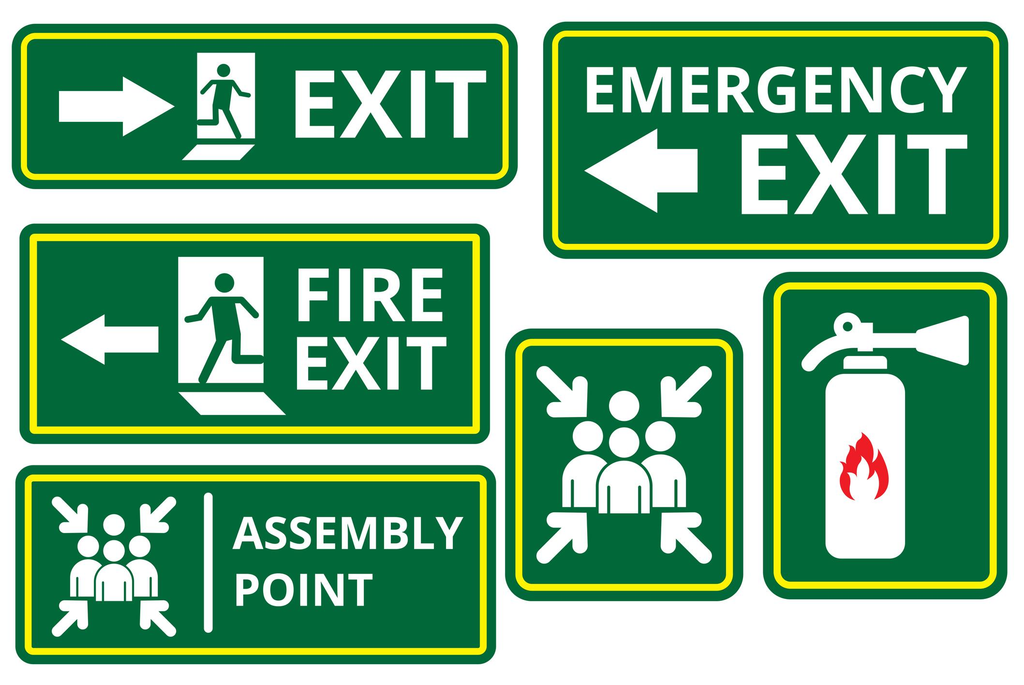
17.4 Emergency Exits
Emergency exits are specially designated routes or doors used to leave a building safely during emergencies.
Safety rules:
- Keep exits clear.
- Do not block emergency doors.
- Display exit signs clearly.
- Keep evacuation routes accessible.
- Ensure employees know the nearest exit.
18. Evacuation Procedures
Evacuation means moving people from a dangerous place to a safe location during an emergency.
General Evacuation Steps
- Remain calm and do not panic.
- Stop work immediately.
- Follow the alarm and instructions.
- Use the nearest safe emergency exit.
- Do not use lifts or elevators during a fire evacuation.
- Use staircases where safe.
- Do not return to collect personal belongings.
- Help people who need assistance, where it is safe to do so.
- Reach the designated assembly point.
- Inform the responsible authority if anyone is missing.
19. Fire Hazards and Fire Safety
Fire is one of the most dangerous workplace hazards.
Common causes of fire
- Electrical short circuits.
- Overloaded sockets.
- Flammable liquids.
- Combustible materials.
- Improper storage of chemicals.
- Careless use of heating equipment.
19.1 Fire Prevention Measures
- Inspect electrical wiring regularly.
- Keep flammable materials away from ignition sources.
- Maintain fire extinguishers.
- Install fire alarms.
- Keep emergency exits accessible.
- Conduct fire safety training.
- Avoid smoking in restricted areas.
19.2 Classification of Fires
Fire classification may vary according to the applicable standard and textbook. Students should follow the classification prescribed by their school textbook.
A commonly taught classification is:
| Class | Type of Fire | Examples |
|---|---|---|
| Class A | Ordinary solid combustible materials | Wood, paper, cloth |
| Class B | Flammable liquids | Petrol, oil, paint |
| Class C | Electrical equipment fires in the classification used in some study materials | Computers, electrical panels |
| Class D | Combustible metals | Magnesium, sodium, potassium |
Important safety note: Some fire safety standards classify fires differently, including separate treatment of electrical and gas fires. Always check the fire extinguisher label and follow the local fire safety standard.
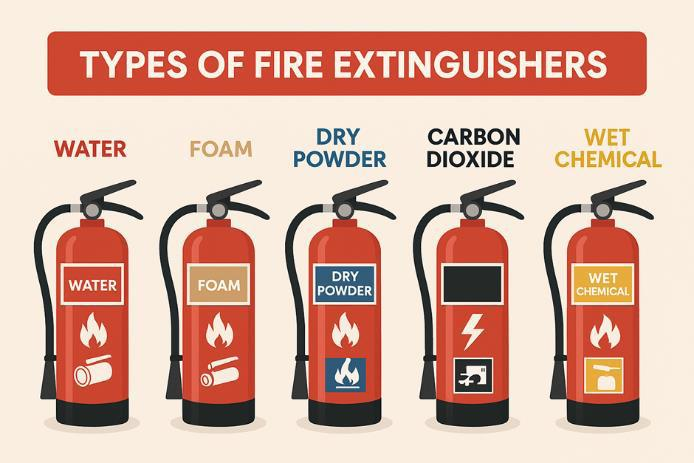
19.3 Types of Fire Extinguishers
| Fire Extinguisher | Common Use |
|---|---|
| Water | Ordinary Class A solid-material fires |
| Carbon Dioxide (CO₂) | Suitable electrical equipment and certain liquid fires, subject to the extinguisher rating |
| Foam | Suitable for certain Class A and Class B fires |
| Dry Chemical Powder | Suitable for the fire classes indicated on its label |
| Special Class D Powder | Combustible metal fires |
Important precautions:
- Never throw water on an energised electrical fire.
- Never use an ordinary water extinguisher on flammable liquid or combustible metal fires.
- Use only an extinguisher rated for the particular fire.
- Raise the alarm and evacuate if the fire is spreading.
- Do not attempt to fight a fire unless it is safe and you are trained.
20. Important Terms to Remember
| Term | Meaning |
|---|---|
| Health | Physical, mental and social well-being. |
| Safety | Protection from accidents and injuries. |
| Security | Protection from threats and unauthorised access. |
| Hazard | Anything that can cause harm. |
| Risk | Possibility of harm occurring. |
| HSS Policy | Health, Safety and Security policy. |
| Ergonomics | Designing the workplace for comfort, safety and efficiency. |
| PPE | Personal Protective Equipment. |
| First Aid | Immediate assistance given to an injured or sick person. |
| Evacuation | Moving people from danger to a safe place. |
| RSI | Repetitive Strain Injury. |
| OOS | Occupational Overuse Syndrome. |
21. Important Short Answer Questions
Q1. What is a hazard?
Ans. A hazard is anything that has the potential to cause injury, illness, damage or loss.
Q2. What is risk?
Ans. Risk is the possibility or likelihood that a hazard will cause harm, taking into account the severity of its consequences.
Q3. What is ergonomics?
Ans. Ergonomics is the science of designing and arranging the workplace, equipment and furniture to suit human needs and improve comfort, safety and efficiency.
Q4. What is PPE? Give two examples.
Ans. PPE stands for Personal Protective Equipment. It is used to protect workers from workplace hazards. Examples include safety gloves and safety goggles.
Q5. What is an HSS policy?
Ans. An HSS policy is a written statement that explains an organisation’s commitment and procedures for maintaining health, safety and security.
Q6. What is first aid?
Ans. First aid is the immediate assistance provided to an injured or sick person before professional medical help arrives.
Q7. What is evacuation?
Ans. Evacuation is the process of moving people from a dangerous area to a safe location during an emergency.
Q8. Mention any four causes of workplace accidents.
Ans.
- Wet floors.
- Loose electrical wires.
- Poor lighting.
- Improper handling of heavy objects.
Q9. What is RSI?
Ans. RSI stands for Repetitive Strain Injury. It is an injury that may develop due to repeated movements or overuse of muscles, tendons and joints.
Q10. Why should emergency exits be kept clear?
Ans. Emergency exits should be kept clear so that people can leave the building quickly and safely during emergencies.
22. Important Long Answer Questions
Q1. Explain any five workplace safety guidelines.
Ans.
- Keep the workplace clean and organised.
- Use protective equipment wherever necessary.
- Do not use damaged electrical wires.
- Keep emergency exits clear.
- Follow safety instructions while operating equipment.
Q2. Explain the different types of workplace hazards.
Ans.
- Physical hazards: Uneven floors, falling objects and poor lighting.
- Electrical hazards: Damaged wires, electric shocks and overloaded sockets.
- Fire hazards: Short circuits and improper storage of flammable materials.
- Health hazards: Noise, dust, harmful fumes and poor ventilation.
- Computer-related hazards: Eye strain, neck pain and repetitive strain injuries.
Q3. Explain the importance of ergonomics in the workplace.
Ans. Ergonomics is important because it:
- Improves employee comfort.
- Reduces physical strain.
- Prevents back and neck pain.
- Reduces repetitive strain injuries.
- Improves productivity and efficiency.
Q4. Describe the general steps to follow during an emergency evacuation.
Ans.
- Remain calm.
- Stop work and follow emergency instructions.
- Use the nearest safe emergency exit.
- Do not use lifts during fire evacuation.
- Do not collect personal belongings.
- Reach the designated assembly point.
- Report missing persons to the responsible authority.
Q5. Explain the different types of fire extinguishers.
Ans.
- Water extinguisher: Used for ordinary solid-material fires.
- CO₂ extinguisher: Used for certain electrical equipment and liquid fires.
- Foam extinguisher: Used for suitable solid and flammable liquid fires.
- Dry chemical powder extinguisher: Used for the fire classes indicated on its label.
- Special Class D powder: Used for combustible metal fires.
The correct extinguisher must always be selected according to the fire classification and safety instructions.
23. Quick Revision Checklist
Before your examination, make sure you can explain:
- Meaning of health, safety and security.
- HSS policies and their importance.
- Difference between hazard and risk.
- Types of workplace hazards.
- Electrical and fire safety precautions.
- Computer-related health hazards.
- Office ergonomics.
- Musculoskeletal problems and RSI.
- Hazard control measures.
- Workplace cleanliness and air quality.
- Accident and emergency procedures.
- First aid and emergency contacts.
- Evacuation procedures.
- Fire classifications and extinguishers.
Conclusion
Maintaining a healthy, safe and secure working environment is everyone’s responsibility. By following safety guidelines, using equipment correctly, maintaining proper ergonomics and understanding emergency procedures, we can prevent accidents and create a better workplace.
Students should understand these concepts with practical examples because workplace safety is useful not only for examinations but also in everyday life.
Keep Learning, Keep Growing!
The Study Smart – Your Learning Partner for CBSE Notes and Entrance Exam Preparation.