CBSE Class 9 Science | Chapter: Cell – The Building Block of Life
Welcome to The Study Smart! In this chapter, we will explore the fascinating world of cells, the basic building blocks of all living organisms. These Class 9 Science notes explain the structure of cells, their different types, cell organelles and their functions in simple language.
Whether you are preparing for your school examination, revising important concepts or completing your Science assignments, these comprehensive notes will help you understand the chapter effectively.
Table of Contents
- What is a Cell?
- Levels of Organisation in Living Organisms
- Discovery of the Cell
- How Do We Study Cells?
- Types of Organisms Based on Number of Cells
- Structure of a Cell
- Cell Membrane and Cell Wall
- Diffusion and Osmosis
- Prokaryotic and Eukaryotic Cells
- Cell Organelles and Their Functions
- Nucleus, DNA, Genes and Chromosomes
- Cell Division – Mitosis and Meiosis
- Cell Theory
- Important Differences
- Important Terms for Examination
- Quick Revision
- Frequently Asked Questions
1. What is a Cell?
A cell is the basic structural and functional unit of life. All living organisms are made up of one or more cells.
Cells perform essential life processes such as respiration, nutrition, growth, excretion and reproduction. They are therefore called the building blocks of life.
Examples:
- Amoeba consists of a single cell.
- Bacteria are made up of a single cell.
- Humans are made up of trillions of cells.
- Plants are also made up of numerous cells.
Why is a Cell Called the Fundamental Unit of Life?
A cell is called the fundamental unit of life because:
- All living organisms are made up of cells.
- Cells provide the basic structure of living organisms.
- All essential life activities take place within cells.
- New cells arise from pre-existing cells.
- Cells contain genetic information that controls their activities.
2. Levels of Organisation in Living Organisms
In multicellular organisms, cells are organised into different levels to perform specific functions.
The organisation follows this sequence:
Cells → Tissues → Organs → Organ Systems → Organism
Explanation
- Cell: The smallest structural and functional unit of life.
- Tissue: A group of similar cells performing a particular function.
- Organ: A structure made up of different tissues working together.
- Organ System: A group of organs working together to perform major functions.
- Organism: A complete living individual.
Example: In humans, muscle cells form muscle tissue, which forms muscles that work with other organs as part of body systems.
3. Discovery of the Cell
The discovery of the cell was an important milestone in the development of biology.
In 1665, Robert Hooke observed a thin slice of cork under a microscope. He noticed numerous small, box-like compartments and named them cells.
These were actually dead cells.
Important Scientists and Their Contributions
| Scientist | Year | Contribution |
|---|---|---|
| Robert Hooke | 1665 | Discovered and named cells while observing cork |
| Antonie van Leeuwenhoek | 1674 | Observed living cells in pond water |
| Robert Brown | 1831 | Discovered the nucleus |
| J. E. Purkinje | 1839 | Introduced the term protoplasm |
4. How Do We Study Cells?
Most cells are extremely small and cannot be seen with our naked eyes. Therefore, microscopes are used to observe them.
A microscope is an instrument that magnifies very small objects and makes their structures visible.
Important Microscope Terms
1. Magnification: The ability of a microscope to make an object appear larger than its actual size.
Total Magnification = Eyepiece Magnification × Objective Magnification
Example:
Eyepiece = 10×
Objective = 40×
Total Magnification = 10 × 40 = 400×
2. Resolution: The ability to distinguish two closely placed points as separate points.
3. Contrast: The difference in appearance between different parts of an image, helping us identify structures clearly.
5. Types of Organisms Based on Number of Cells
Living organisms are classified into two main categories based on the number of cells present in their bodies.
A. Unicellular Organisms
Organisms made up of only one cell are called unicellular organisms.
The single cell performs all necessary life activities, including nutrition, respiration, excretion and reproduction.
Examples:
- Amoeba
- Paramecium
- Bacteria
- Yeast
B. Multicellular Organisms
Organisms made up of many cells are called multicellular organisms.
Different cells perform different specialised functions.
Examples:
- Human beings
- Dogs
- Fish
- Mango plants
- Trees
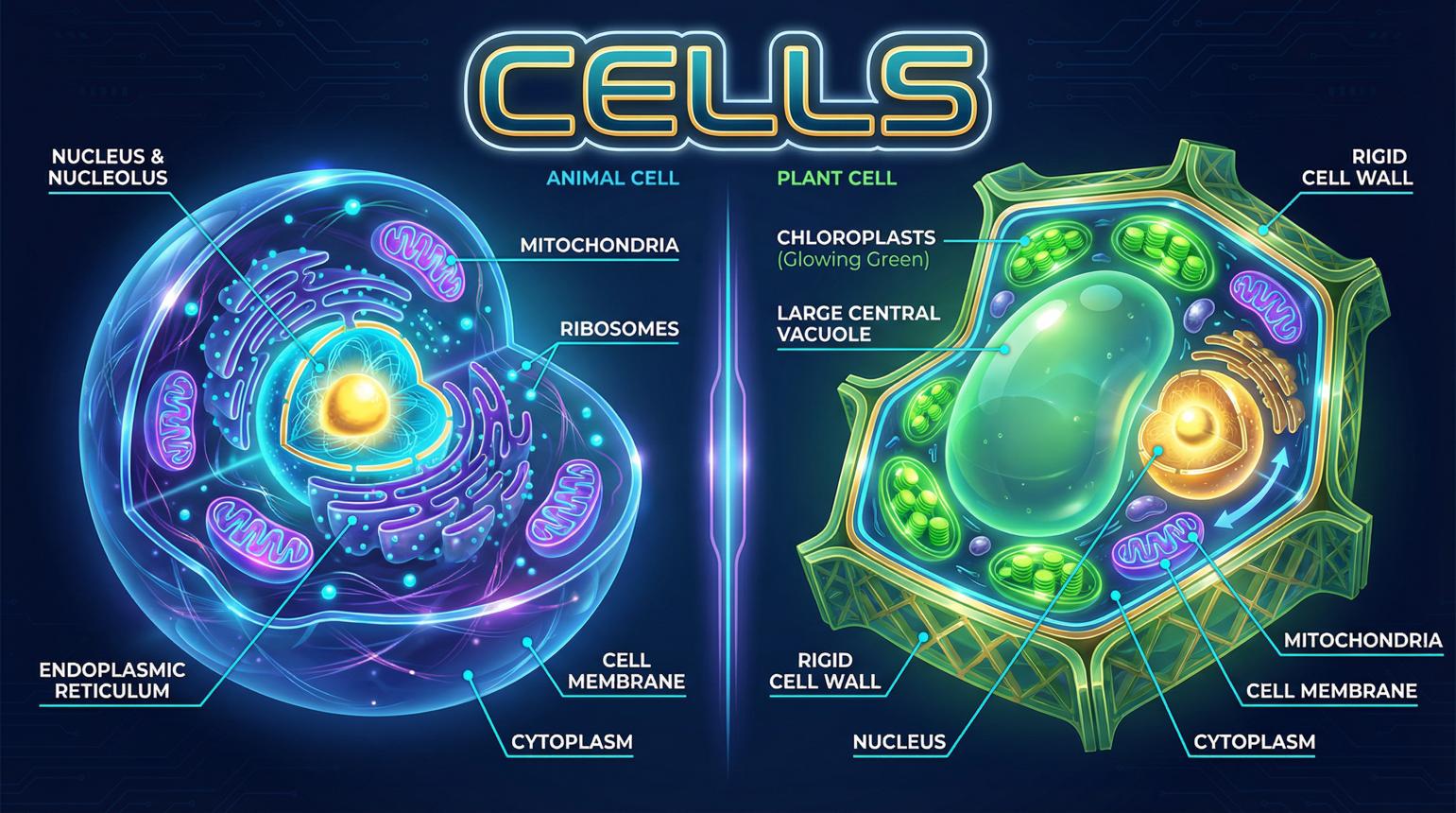
6. Structure of a Cell
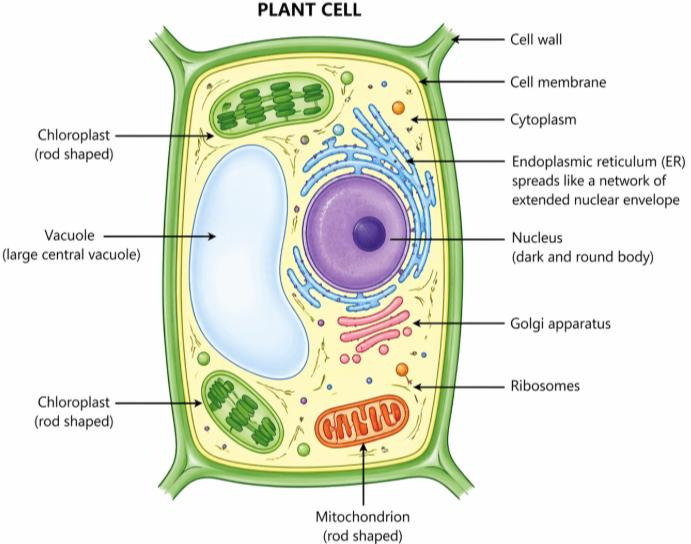
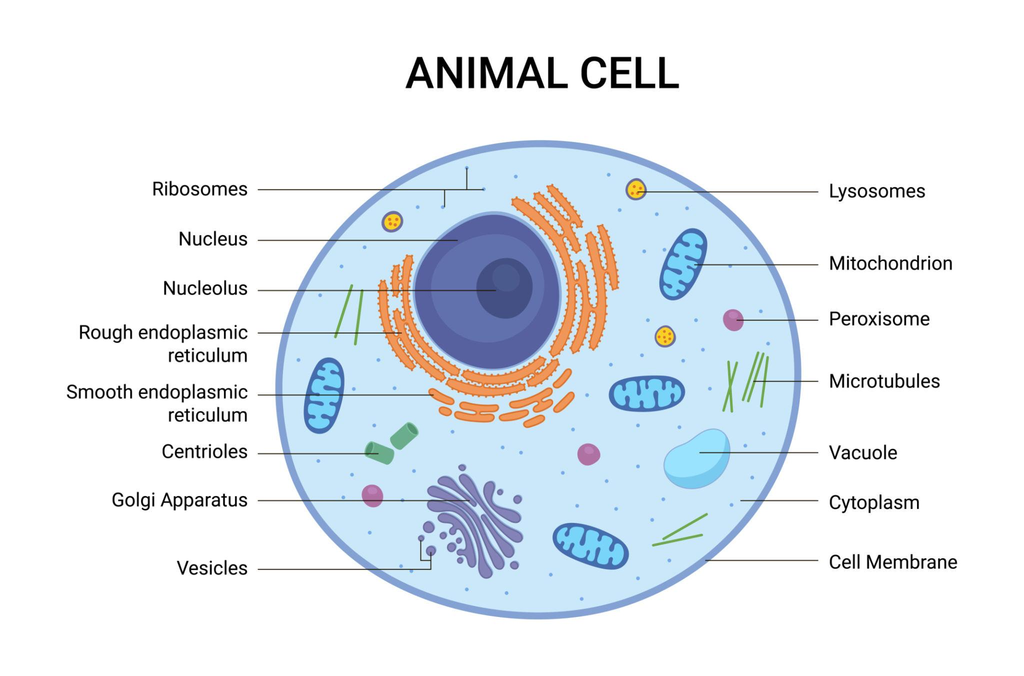
A typical cell consists of three major components:
- Plasma Membrane
- Cytoplasm
- Nucleus
The cytoplasm contains several specialised structures known as cell organelles.
A. Plasma Membrane (Cell Membrane)
The plasma membrane is the thin, flexible outer covering of a cell. It separates the contents of the cell from its surroundings.
It is mainly composed of lipids and proteins.
Functions:
- Protects the internal contents of the cell.
- Separates the cell from its external environment.
- Controls the movement of substances into and out of the cell.
- Helps maintain the internal environment of the cell.
The plasma membrane is called selectively permeable because it allows only certain substances to pass through it.
B. Cytoplasm
Cytoplasm is the jelly-like substance present between the plasma membrane and the nucleus.
It contains various cell organelles and is the site of many important chemical reactions.
Functions:
- Holds the cell organelles.
- Provides a medium for biochemical reactions.
- Helps in the movement and transport of materials inside the cell.
C. Nucleus
The nucleus is generally regarded as the control centre of the cell because it regulates many cellular activities.
It contains genetic material in the form of DNA.
Functions:
- Controls various activities of the cell.
- Stores hereditary information.
- Helps regulate cell growth and division.
- Passes genetic information to daughter cells.
The nucleus is surrounded by a double-layered nuclear membrane containing pores.
It contains:
- Nuclear membrane
- Nucleoplasm
- Nucleolus
- Chromatin
7. Cell Wall
The cell wall is a rigid, non-living outer covering found in plant cells. It is also present in fungi and bacteria, although its composition differs among these groups.
In plants, the cell wall is mainly made up of cellulose.
Functions of Cell Wall:
- Provides shape and rigidity to the cell.
- Protects the cell against mechanical damage.
- Provides structural support.
- Prevents the cell from bursting when excess water enters.
Difference Between Cell Wall and Cell Membrane
| Cell Wall | Cell Membrane |
|---|---|
| Rigid outer covering | Thin and flexible covering |
| Non-living | Living structure |
| Mainly composed of cellulose in plants | Mainly composed of lipids and proteins |
| Freely permeable in the basic school-level description | Selectively permeable |
| Present in plant cells, fungi and bacteria | Present in all cells |
8. Transport of Substances Across the Cell Membrane
Materials continuously move into and out of cells. This movement is essential for maintaining life.
Two important transport processes are diffusion and osmosis.
A. Diffusion
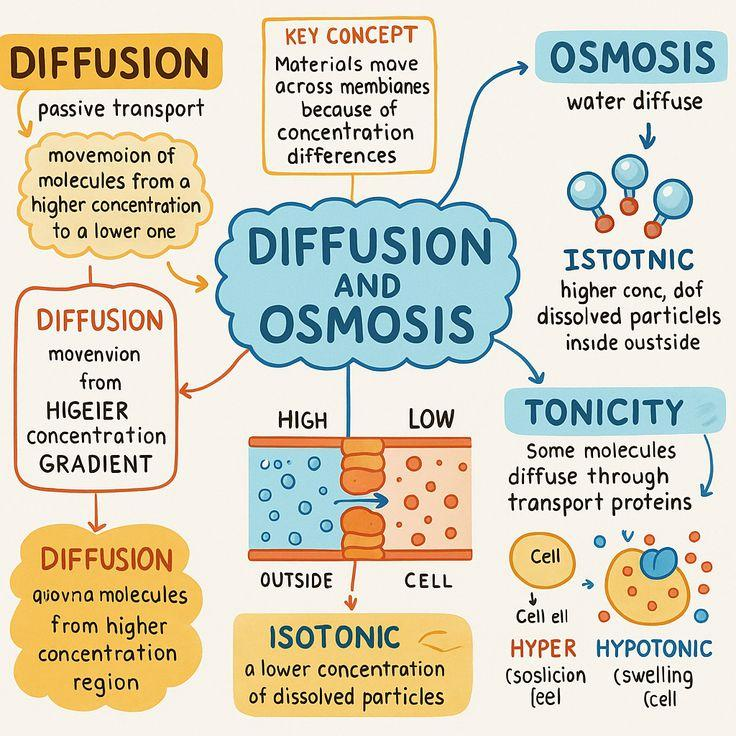
Diffusion is the movement of particles from a region of higher concentration to a region of lower concentration.
It is a passive process and does not require cellular energy.
Examples:
- Spreading of perfume throughout a room.
- Movement of oxygen into cells.
- Movement of carbon dioxide out of cells.
B. Osmosis
Osmosis is the movement of water through a selectively permeable membrane from a region of higher water concentration to a region of lower water concentration.
Examples:
- Absorption of water by plant roots.
- Movement of water into and out of cells.
Difference Between Diffusion and Osmosis
| Diffusion | Osmosis |
|---|---|
| Movement of particles from higher to lower concentration | Movement of water through a selectively permeable membrane |
| Can occur in gases and liquids, and in suitable solid systems | Involves water or solvent |
| A selectively permeable membrane is not essential | A selectively permeable membrane is essential |
| Example: Perfume spreading in a room | Example: Water absorption by roots |
Types of Solutions and Their Effects on Cells
1. Hypotonic Solution
A solution having a lower solute concentration than the cell contents.
Water enters the cell by osmosis. Plant cells become turgid, while animal cells may swell.
2. Hypertonic Solution
A solution having a higher solute concentration than the cell contents.
Water moves out of the cell. In plant cells, the protoplasm shrinks away from the cell wall. This process is called plasmolysis.
3. Isotonic Solution
A solution having approximately the same effective solute concentration as the cell contents.
There is no net movement of water across the membrane.
Plasmolysis
Plasmolysis is the process in which the cell contents shrink away from the cell wall when a plant cell is placed in a hypertonic solution.
9. Fluid Mosaic Model of Cell Membrane
According to the fluid mosaic model, the plasma membrane consists of a double layer of lipid molecules with proteins embedded in or associated with it.
The lipid molecules and many proteins can move within the membrane, making it flexible.
This arrangement helps the membrane control the movement of substances into and out of the cell.
10. Prokaryotic and Eukaryotic Cells
On the basis of their internal structure, cells are classified into two major categories.
A. Prokaryotic Cells
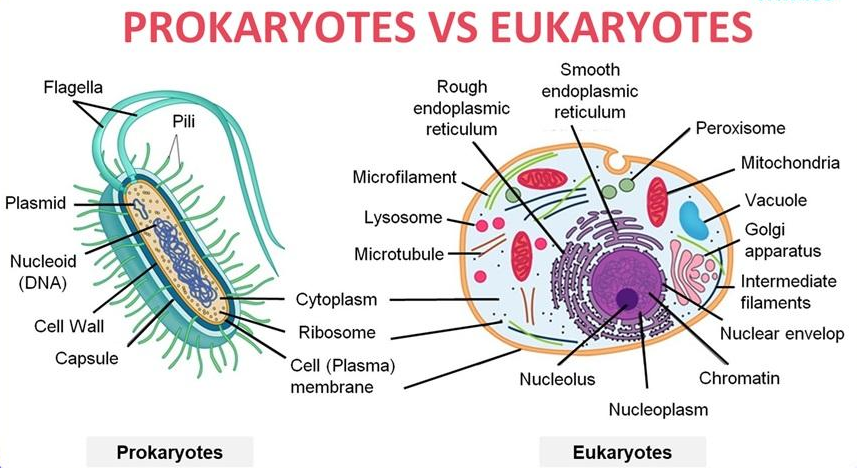
Prokaryotic cells are simple cells that do not have a well-defined nucleus surrounded by a nuclear membrane.
Their genetic material is present in a region called the nucleoid.
Membrane-bound organelles are absent.
Examples:
- Bacteria
- Cyanobacteria
B. Eukaryotic Cells
Eukaryotic cells have a well-defined nucleus surrounded by a nuclear membrane.
They contain membrane-bound organelles such as mitochondria, endoplasmic reticulum and Golgi apparatus.
Examples:
- Plant cells
- Animal cells
- Fungal cells
Difference Between Prokaryotic and Eukaryotic Cells
| Prokaryotic Cells | Eukaryotic Cells |
|---|---|
| No well-defined nucleus | Well-defined nucleus |
| Nuclear membrane absent | Nuclear membrane present |
| Membrane-bound organelles absent | Membrane-bound organelles present |
| Generally smaller and simpler | Generally larger and more complex |
| Example: Bacteria | Examples: Plants and animals |
11. Cell Organelles and Their Functions
Cell organelles are specialised structures present inside cells. Each organelle performs a particular function necessary for the survival of the cell.
1. Endoplasmic Reticulum (ER)
The endoplasmic reticulum is a network of membrane-bound tubes and sacs present in the cytoplasm.
It helps in the synthesis and transport of materials within the cell.
There are two types:
Rough Endoplasmic Reticulum (RER)
- Ribosomes are attached to its surface.
- Helps in protein synthesis and processing.
- Particularly important in cells that produce proteins for secretion.
Smooth Endoplasmic Reticulum (SER)
- Ribosomes are absent on its surface.
- Helps in the synthesis of lipids.
- Participates in detoxification in certain cells.
2. Golgi Apparatus
The Golgi apparatus consists of stacks of flattened membrane-bound sacs.
It acts as the packaging and distribution centre of the cell.
Functions:
- Modifies proteins and lipids.
- Sorts and packages materials.
- Helps transport materials to different parts of the cell.
- Plays an important role in the formation of lysosomes.
3. Lysosomes
Lysosomes are membrane-bound sacs containing digestive enzymes.
They help break down waste materials, foreign particles and damaged cell organelles.
Functions:
- Digest unwanted materials.
- Remove damaged organelles.
- Help keep the cell clean.
Lysosomes are sometimes called the suicide bags of the cell because their digestive enzymes may cause self-digestion if released uncontrollably inside a severely damaged cell.
4. Mitochondria
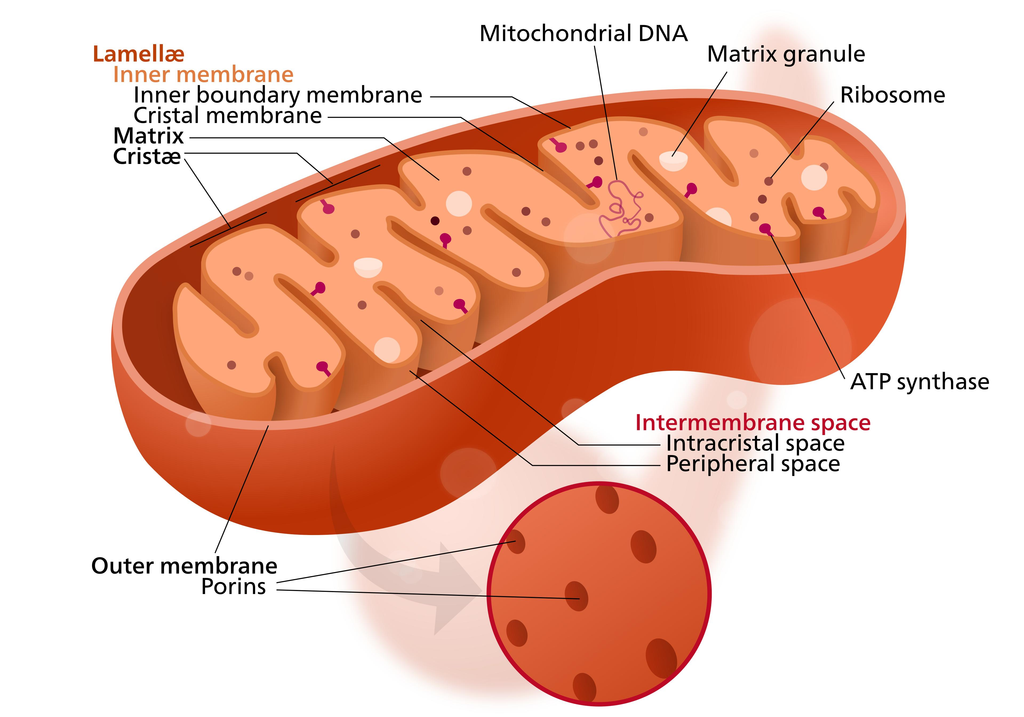
Mitochondria are known as the powerhouses of the cell because they play a major role in releasing energy from food during cellular respiration.
The energy is stored in the form of ATP (Adenosine Triphosphate).
Functions:
- Help in cellular respiration.
- Produce ATP.
- Supply energy for cellular activities.
Important features:
- Have a double membrane.
- Inner membrane is folded into structures called cristae.
- Contain their own DNA and ribosomes.
5. Plastids
Plastids are membrane-bound organelles found in plant cells and algae.
They are mainly responsible for food production, storage and pigmentation.
There are three major types:
A. Chloroplasts
- Contain the green pigment chlorophyll.
- Help in photosynthesis.
- Absorb sunlight for the preparation of food.
B. Chromoplasts
- Contain pigments responsible for yellow, orange and red colours.
- Give colour to many flowers and fruits.
C. Leucoplasts
- Colourless plastids.
- Help store food materials such as starch, oils and proteins.
6. Vacuoles
Vacuoles are membrane-bound storage sacs present in cells.
They contain a fluid called cell sap.
Functions:
- Store water and nutrients.
- Store waste materials.
- Maintain the internal pressure of plant cells.
- Help maintain the rigidity of plants.
In plant cells, a large central vacuole is generally present, while animal cells usually have smaller vacuoles.
7. Ribosomes
Ribosomes are tiny, non-membrane-bound structures present in the cytoplasm and attached to the rough endoplasmic reticulum.
They are called the protein factories of the cell because they are responsible for protein synthesis.
Summary of Cell Organelles and Their Functions
| Cell Organelle | Main Function |
|---|---|
| Nucleus | Controls cellular activities |
| Mitochondria | Produces ATP and releases energy |
| Ribosomes | Protein synthesis |
| Endoplasmic Reticulum | Synthesis and transport of materials |
| Golgi Apparatus | Modification, packaging and transport |
| Lysosomes | Intracellular digestion |
| Vacuoles | Storage and maintaining turgidity |
| Chloroplasts | Photosynthesis |
| Chromoplasts | Provide colour |
| Leucoplasts | Food storage |
12. Nucleus, DNA, Genes and Chromosomes
The nucleus contains the genetic material that controls the characteristics and activities of living organisms.
DNA (Deoxyribonucleic Acid)
DNA is the hereditary material found in cells. It contains instructions required for the development, functioning and reproduction of living organisms.
Genes
Genes are specific segments of DNA that carry information for particular functional products and contribute to inherited characteristics.
Chromosomes
Chromosomes are organised structures made up of DNA and proteins. They carry genetic information from one generation to another.
Relationship Between DNA, Genes and Chromosomes
- Chromosomes contain DNA.
- Genes are specific sections of DNA.
- DNA carries hereditary information.
13. Cell Division
Cell division is the process by which a parent cell divides to produce new daughter cells.
It is essential for:
- Growth of organisms.
- Repair of damaged tissues.
- Replacement of old and dead cells.
- Reproduction.
There are two major types of cell division:
A. Mitosis
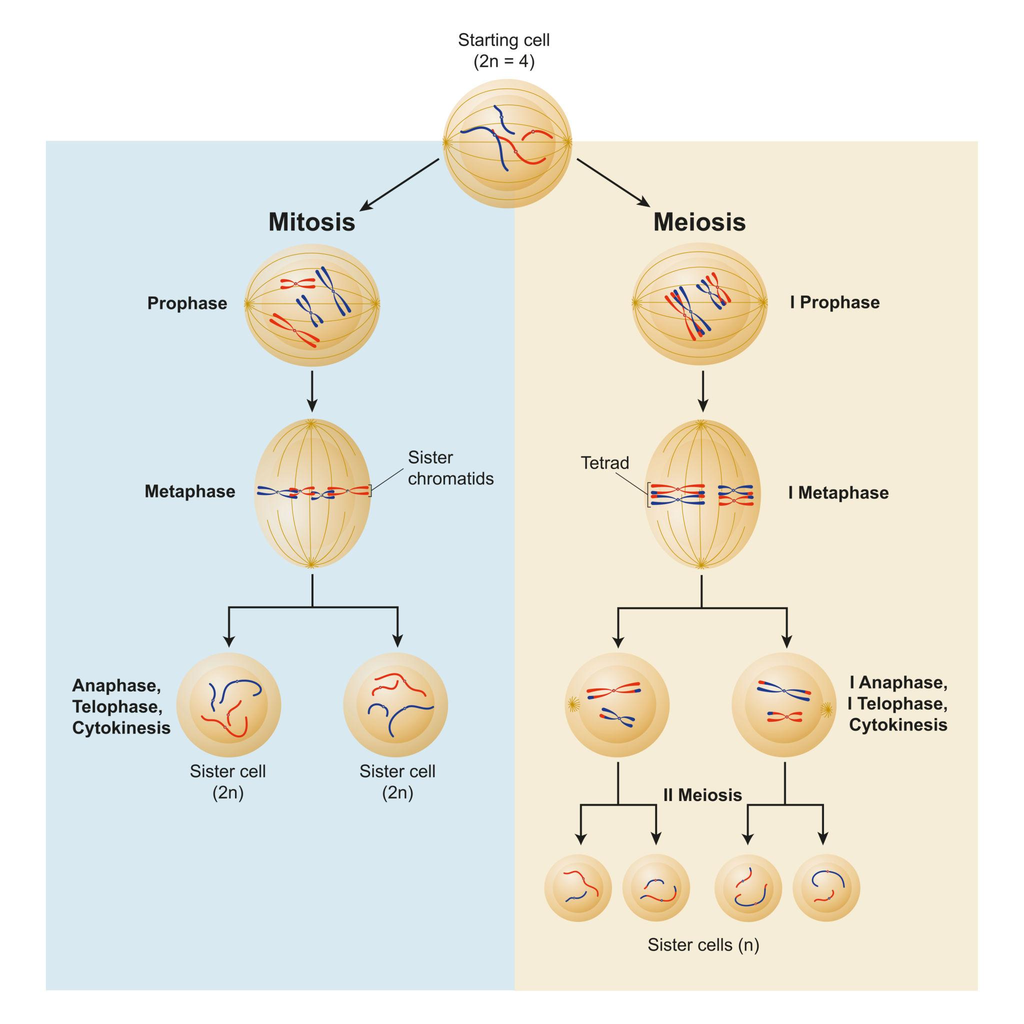
Mitosis is a type of cell division in which one parent cell produces two genetically identical daughter cells, generally having the same chromosome number as the parent cell.
Importance of Mitosis:
- Helps in growth.
- Repairs damaged tissues.
- Replaces worn-out cells.
- Maintains chromosome number in body cells.
B. Meiosis
Meiosis is a special type of cell division in which one parent cell undergoes two successive divisions to produce four daughter cells with half the chromosome number of the parent cell.
It is important for the formation of gametes in sexually reproducing organisms.
Importance of Meiosis:
- Produces reproductive cells.
- Reduces the chromosome number by half.
- Helps maintain the chromosome number across generations after fertilisation.
- Contributes to genetic variation.
Difference Between Mitosis and Meiosis
| Mitosis | Meiosis |
|---|---|
| One division | Two successive divisions |
| Produces two daughter cells | Produces four daughter cells |
| Chromosome number remains the same | Chromosome number becomes half |
| Daughter cells are generally genetically identical | Daughter cells are genetically different |
| Helps in growth and repair | Helps in sexual reproduction |
14. Cell Theory
Cell theory is one of the fundamental principles of biology.
The classical cell theory states:
- All living organisms are made up of one or more cells.
- The cell is the basic structural and functional unit of life.
- All cells arise from pre-existing cells.
This theory explains the importance of cells in the structure, functioning and continuity of life.
15. Important Differences for Examination
Plant Cell and Animal Cell
| Plant Cell | Animal Cell |
|---|---|
| Cell wall is present | Cell wall is absent |
| Plastids are present in photosynthetic plant cells | Plastids are absent |
| Usually has a large central vacuole | Vacuoles are generally small or may be absent |
| Usually has a more fixed shape | Shape is often more flexible and variable |
Rough ER and Smooth ER
| Rough ER | Smooth ER |
|---|---|
| Ribosomes are present | Ribosomes are absent |
| Appears rough | Appears smooth |
| Helps in protein synthesis | Helps in lipid synthesis |
Unicellular and Multicellular Organisms
| Unicellular | Multicellular |
|---|---|
| Made up of one cell | Made up of many cells |
| One cell performs all life activities | Different cells perform specialised functions |
| Example: Amoeba | Example: Human beings |
16. Important Terms to Remember
| Term | Meaning |
|---|---|
| Cell | Basic structural and functional unit of life |
| Organelle | Specialised structure inside a cell |
| Protoplasm | Living contents of a cell, mainly cytoplasm and nucleus |
| Cytoplasm | Jelly-like substance containing organelles |
| Osmosis | Movement of water through a selectively permeable membrane |
| Diffusion | Movement of particles from higher to lower concentration |
| Plasmolysis | Shrinking of protoplasm away from the cell wall |
| ATP | Energy-carrying molecule of the cell |
| Cristae | Folds of the inner mitochondrial membrane |
| Nucleoid | Region containing genetic material in a prokaryotic cell |
| Chromatin | DNA-protein material present in the nucleus |
| Gene | Functional segment of DNA |
| Chromosome | DNA-protein structure carrying genetic information |
17. Quick Revision – One-Minute Chapter Summary
- Cell is the basic structural and functional unit of life.
- Robert Hooke discovered and named cells in 1665.
- Antonie van Leeuwenhoek observed living cells.
- The nucleus controls cellular activities.
- Mitochondria are called the powerhouse of the cell.
- Ribosomes are the protein factories of the cell.
- Lysosomes are called the suicide bags of the cell.
- Chloroplasts help in photosynthesis.
- Vacuoles help in storage and maintaining turgidity.
- Diffusion is the movement of particles from higher to lower concentration.
- Osmosis is the movement of water through a selectively permeable membrane.
- Prokaryotic cells lack a well-defined nucleus.
- Eukaryotic cells have a well-defined nucleus.
- Mitosis produces two daughter cells.
- Meiosis produces four daughter cells.
18. Frequently Asked Questions (FAQs)
Q1. What is the fundamental unit of life?
Answer: The cell is the fundamental structural and functional unit of life.
Q2. Who discovered the cell?
Answer: Robert Hooke discovered and named cells in 1665 while observing a thin slice of cork under a microscope.
Q3. Why are mitochondria called the powerhouse of the cell?
Answer: Mitochondria are called the powerhouse of the cell because they release energy from food during cellular respiration and help produce ATP.
Q4. What is the main function of the nucleus?
Answer: The nucleus stores genetic material and controls various activities of the cell.
Q5. What is the difference between diffusion and osmosis?
Answer: Diffusion is the movement of particles from a region of higher concentration to lower concentration. Osmosis is the movement of water through a selectively permeable membrane.
Q6. What are lysosomes?
Answer: Lysosomes are membrane-bound organelles containing digestive enzymes that break down waste materials and damaged cell components.
Q7. What is the function of chloroplasts?
Answer: Chloroplasts contain chlorophyll and help plants prepare food through photosynthesis.
Q8. What are the two main types of cells?
Answer: Prokaryotic cells and eukaryotic cells.
Q9. What is plasmolysis?
Answer: Plasmolysis is the shrinking of the protoplasm away from the cell wall when a plant cell loses water in a hypertonic solution.
Q10. What is the difference between mitosis and meiosis?
Answer: Mitosis generally produces two genetically identical daughter cells with the same chromosome number, whereas meiosis produces four daughter cells with half the chromosome number.
Conclusion
Cells are the foundation of all living organisms. Every cell contains specialised structures that work together to carry out essential life processes. Understanding the structure and functions of cell organelles helps us understand how living organisms grow, function and reproduce.
We hope these Class 9 Science notes on Cell – The Building Block of Life help you prepare effectively for your examinations.
Keep learning, keep practising and keep exploring with The Study Smart!