










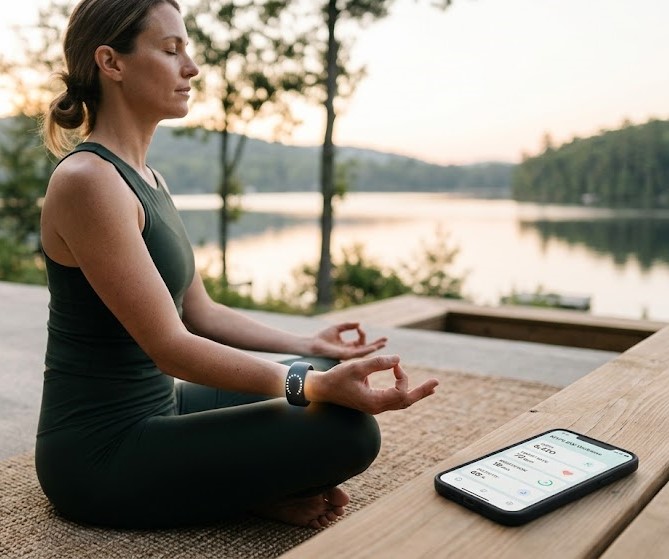
Fitbit seems to be going in a totally different direction in the era of screens taking over almost every aspect of our daily lives by planning to launch its latest wearable device without a display screen.
Why No Screen at All?
Smart devices started off being just step counters but grew into full-fledged gadgets equipped with fancy displays, apps and notification system. The drawbacks associated with this include decreased battery performance, distractions and even screen fatigue.
Elimination of the screen will help Fitbit achieve the following advantages:
- Focus on fitness rather than digital engagement
- Increase in battery capacity (possibly measured in weeks rather than days)
- Production of lightweight wearables
- No need for screens, thus addressing digital detox
It should also be noted that this development is linked to Google’s plans in terms of incorporating AI into its ecosystem.
How Will It Work?
Unlike a conventional watch face, this gadget will utilize:
- Mobile phone connection for visualizations
- Haptic vibration notifications for alarms and reminders
- Insights from voice or artificial intelligence through companion applications
- Automated monitoring of physiological parameters, including steps taken, heart rate, sleeping pattern, and stress level
The design will prioritize passive data gathering; the device wearer needs only to wear it.
Who Is It For?
The new product will have its target market, most probably comprising:
- Individuals looking for an uncomplicated tech experience
- Consumers struggling with excessive notifications
- Athletes requiring performance data without distractions
- People prioritizing mental well-being and digital harmony
Features
The exact technical characteristics are yet to be announced by Fitbit. However, industry experts anticipate that the gadget will incorporate:
- Heart rate measurements round-the-clock
- In-depth monitoring of nocturnal activities
- Monitoring of stress and recovery processes
- Activity tracking without user input
- Extended autonomy (potentially up to one or two weeks)
Compatibility with Fitbit’s platform will remain a priority, allowing users to gain comprehensive insights using their smartphone application.
Upcoming Challenges
Being screen-less comes with its own sets of challenges:
- It may prove difficult for users who are used to having instant visual responses.
- Reliance on smartphones may pose as a hindrance for some people.
- Competitors offer devices with rich displays.
Fitbit needs to highlight the pros of being minimalistic as opposed to feature-heavy.
The Broader Perspective
The introduction of a screen-less device by Fitbit might signal a change in the way technology moves. With the growing emphasis on digital wellbeing, it may become common for technology companies to shift their focus towards developing products with calmer features—something that does not demand too much attention from the user.