

Introduction
In the digital age, educational institutions are rapidly adopting technology to improve efficiency and streamline operations. A School ERP (Enterprise Resource Planning) system has emerged as a powerful solution that integrates all administrative and academic functions into one centralized platform.
From managing student data to handling admissions, attendance, and examinations, a School ERP simplifies complex processes and enhances productivity. This article explores the key features, benefits, and step-by-step preparation required for implementing a School ERP system successfully.
What is a School ERP System?
A School ERP system is a comprehensive software solution designed to automate and manage school operations. It connects administrators, teachers, students, and parents through a unified digital platform.
By reducing manual work and improving data accessibility, ERP systems help schools operate more efficiently and transparently.
Key Features of a School ERP System
1. Centralized Admin Dashboard
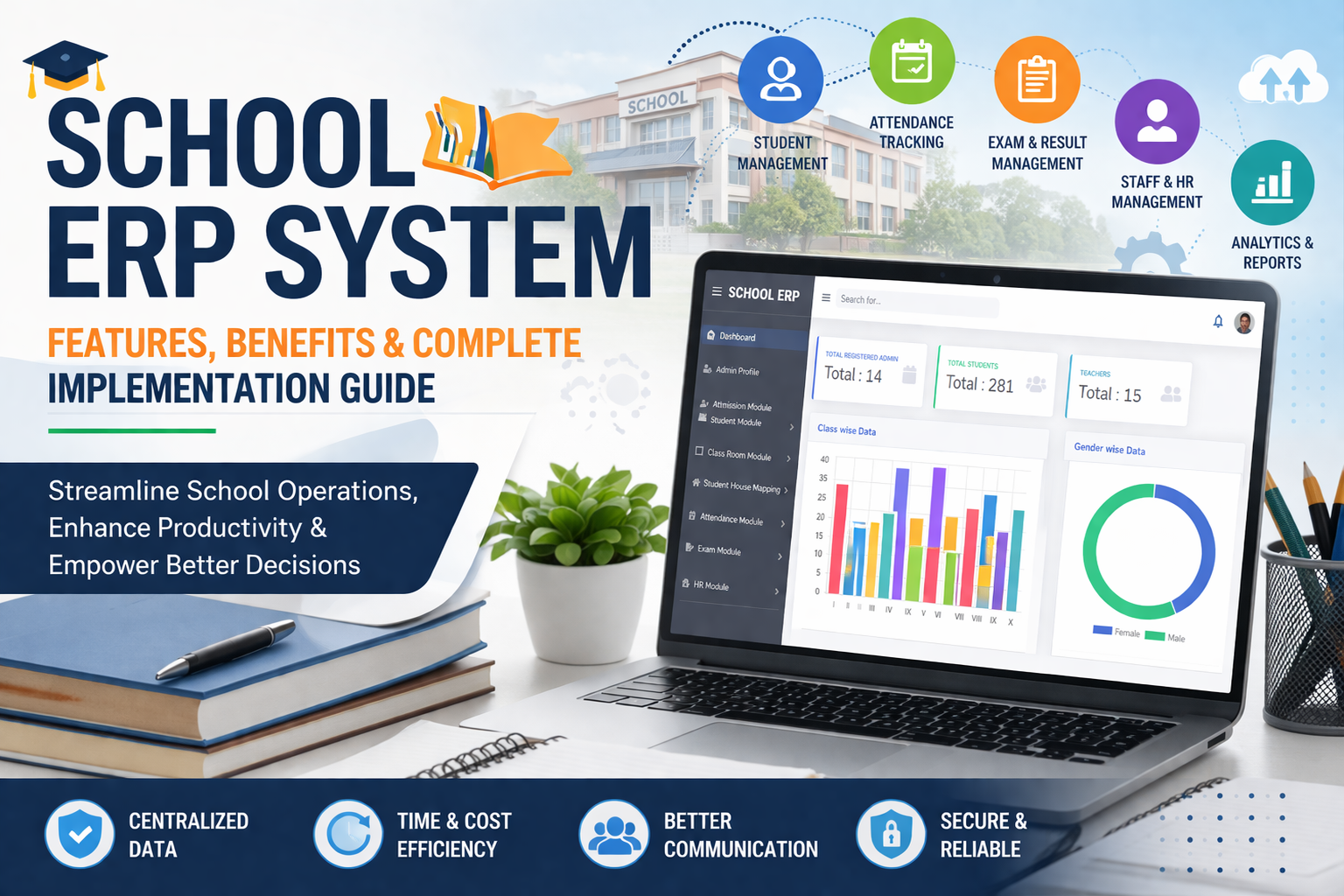
The dashboard provides real-time insights such as:
- Total students
- Total teachers
- Administrative data
This enables quick decision-making and efficient monitoring.
2. Admission Management
- Online application handling
- Admission tracking
- Student data storage
This feature simplifies the enrollment process and reduces paperwork.
3. Student Information System
- Personal and academic records
- Attendance tracking
- Performance reports
It ensures organized and secure data management.
4. Classroom & Timetable Management
- Class scheduling
- Section allocation
- Teacher assignment
Helps maintain structured academic planning.
5. Attendance Tracking
- Daily attendance logs
- Automated reports
- Absentee alerts
Improves discipline and monitoring.
6. Examination & Result Management
- Exam scheduling
- Marks entry
- Report card generation
Ensures accuracy and efficiency in evaluations.
7. HR & Staff Management
- Employee records
- Payroll processing
- Leave management
Reduces administrative burden significantly.
8. Student House Management
- House allocation
- Activity tracking
- Competition management
Encourages student participation and engagement.
9. Reports & Analytics
- Class-wise data charts
- Gender distribution analysis
Helps in strategic planning and decision-making.
10. Search & Navigation
- Quick access to records
- User-friendly interface
Enhances usability and efficiency.
Benefits of School ERP Systems
- ✔ Centralized data management
- ✔ Reduced paperwork
- ✔ Improved communication
- ✔ Better decision-making
- ✔ Time and cost efficiency
- ✔ Increased transparency
Preparation for School ERP Implementation
1. Define Objectives
Identify goals such as automation, reporting, and communication improvements.
2. Involve Stakeholders
Include:
- School administrators
- Teachers
- IT staff
Their involvement ensures smoother adoption.
3. Organize Data
Prepare:
- Student records
- Staff details
- Academic data
Ensure data is accurate and digitized.
4. Choose the Right ERP
Consider:
- Ease of use
- Features
- Security
- Scalability
5. Ensure Infrastructure Readiness
- Reliable internet
- Updated systems
- Secure data storage
6. Training & Onboarding
Train all users to:
- Reduce errors
- Improve efficiency
- Ensure smooth usage
7. Data Migration
- Transfer data securely
- Verify accuracy
- Test integrity
8. Pilot Testing
- Run test implementation
- Identify issues
- Gather feedback
9. Go Live
Deploy the ERP system across all departments and monitor performance.
10. Continuous Improvement
- Regular updates
- User feedback
- Performance tracking
Best Practices
- Start with essential modules
- Maintain backups
- Ensure data security
- Provide continuous training
Common Challenges & Solutions
| Challenge | Solution |
|---|---|
| Resistance to change | Conduct training sessions |
| Data migration errors | Clean and verify data |
| Technical issues | Ensure IT support |
| Budget constraints | Choose scalable ERP |
Future of School ERP Systems
With advancements in technology, ERP systems are evolving with:
- Artificial Intelligence
- Cloud computing
- Mobile accessibility
These innovations will further enhance efficiency and user experience.
Conclusion
A School ERP system is essential for modern educational institutions aiming to improve efficiency, transparency, and productivity. By integrating all operations into one platform, schools can focus more on education and less on administrative complexities.
Proper planning, training, and implementation are key to unlocking the full potential of ERP systems.
❓ FAQs (For SEO + AdSense)
1. What is a School ERP system?
A School ERP is software that manages school operations like admissions, attendance, exams, and staff management in one platform.
2. Why is ERP important for schools?
It improves efficiency, reduces manual work, and enhances communication between stakeholders.
3. Is School ERP suitable for small schools?
Yes, scalable ERP solutions can be customized for schools of all sizes.
4. How long does ERP implementation take?
It typically takes a few weeks to a few months depending on the institution’s size and complexity.
5. Is data secure in ERP systems?
Most ERP systems use encryption and secure servers to protect sensitive data.