










Introduction
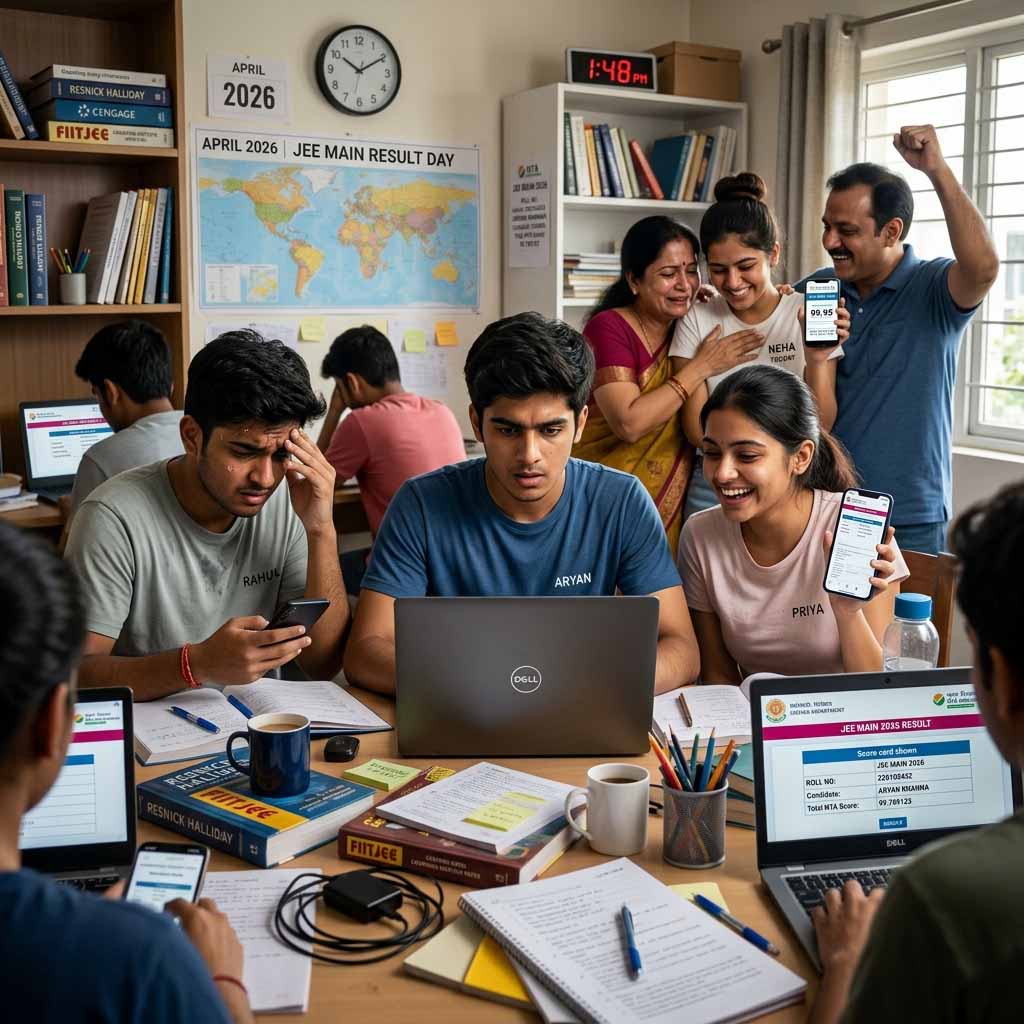
For Indian engineering candidates, the JEE Main 2026 Session 2 results represent a significant turning point. Millions of students take this fiercely competitive test each year, and the outcomes frequently influence future study techniques. A number of significant performance, cutoff, and competition level trends that are worth examining have been identified by the 2026 Session 2 results.
Trend in Overall Performance
Overall, there was fierce competition in JEE Main 2026’s second session. Fairness across shifts with varied levels of difficulty was guaranteed by the normalizing process.
There are now more high scorers, which suggests that the level of preparation has improved overall.
Significantly more candidates than in prior years received scores over the 99 percentile.
Due to variations in difficulty, the connection between marks and percentile changed during shifts.
It is evident from this trend that candidates are getting more strategic and well-prepared.
Analysis of Cutoff Trends
There has been a minor rise in the anticipated cutoff trends for 2026:
- In comparison to prior years, the cutoff for the General group is probably greater.
- There have also been slight adjustments in the OBC, SC, and ST categories.
- The expansion of online learning platforms and improved availability to study materials are responsible for the increase in cutoff.
Crucial Realization:
Future cutoffs might increase even higher if this pattern persists, making the exam more competitive.
Difficulty Level by Shift
There were several shifts for JEE Main 2026 Session 2, each with a different level of difficulty:
Physics: Strong emphasis on numerical issues, moderate to challenging.
Chemistry: Mostly based on NCERT topics and comparatively simpler.
Mathematics: Because of the lengthy calculations and challenging questions, this section is said to be the hardest.
This emphasizes how crucial it is to prepare for all three courses in a balanced manner.
The Trend of Toppers
The topmost analysis offers insightful information about effective preparation techniques:
A flawless 100 percentile was attained by several contestants.
Conceptual clarity and consistent practice were highlighted by the majority of top performers.
Online tools, such as video lectures and practice exams, were crucial.
Acquired Knowledge:
Reaching the top rankings requires discipline, consistency, and astute study methods.
Online education’s role
The impact of online education is one of the biggest changes seen in 2026:
Students are depending more and more on video lectures, exam series, and online coaching.
In addition to traditional tutoring, self-study has grown in significance.
Remote students now have easier access to high-quality learning materials.
The tournament is now more competitive and inclusive as a result of this change.
Typical Errors Made by Students
Results analysis has identified a few typical errors:
- Ineffective time management throughout the test
- Asking too many inaccurate questions
- Poor conceptual comprehension
- Inadequate practice for mock exams
Advice:
Performance can be greatly enhanced by avoiding these errors.
A Plan for Upcoming Candidates
The following techniques should be taken into consideration if you are getting ready for the next JEE Main exams:
- Develop your NCERT foundational knowledge, particularly in Chemistry.
- Take practice exams frequently.
- Complete the question papers from prior years.
- Manage your time well.
- Concentrate on strengthening your weak points.
- JEE Advanced’s impact
JEE Advanced eligibility is directly determined by JEE Main scores. Considering trends from 2026:
Tougher competition for JEE Advanced qualification results from higher cutoffs.
Only the best applicants will be accepted.
Aiming for higher percentiles is therefore even more crucial.
Conclusion
The JEE Main 2026 Session 2 results unequivocally show that the level of competitiveness is rising annually. These days, success demands not only diligence but also astute tactics, regular practice, and efficient use of digital tools.
To stay ahead of the competition, candidates must adopt a focused and disciplined strategy as the test continues to change.